Get In Touch
Our customer support team is available for help.
NetSuite integration services
NetSuite-centred integration work, built with Celigo where a prebuilt connector fits and with Boomi, MuleSoft or direct APIs where it does not.

NetSuite on one side of every integration
Every integration we build has NetSuite on one side of it. That focus is deliberate. Integration problems are rarely about moving data in the abstract, they are about how a specific NetSuite record behaves, what its saved search returns, and which field a downstream process depends on.
The method matters more than most vendors admit. Where a prebuilt connector fits your systems and volumes, Celigo is usually the fastest and cheapest route, and it is where we start. Where requirements exceed what a prebuilt flow handles, we build against NetSuite's own APIs: SuiteTalk REST and SOAP for standard record work, RESTlets where payloads need transformation or business logic before they land. Boomi and MuleSoft are options where you already run them as a company standard.
What we will not do is recommend a platform because it is the one we happen to sell. If a connector does the job, paying for a custom build is waste. If your requirements genuinely exceed a connector, forcing them into one produces something fragile that breaks under volume. Our NetSuite API integration guide covers how these methods differ in practice.

We use REST and SOAP APIs, plus SuiteTalk and SuiteScript 2.0, as our advanced integration techniques for smooth, effective NetSuite integration — an API-first approach reserved for external, cross-system integration rather than internal NetSuite logic.
Find the right integration, fast
Grouped the way our own integration team organizes engagements — pick your category, then your platform.
Real integration delivery
Real client engagement
Every case study reflects a real, completed ERP Peers engagement.

Project context
What integration delivery actually covers
The systems we connect are listed above. This is the work that determines whether an integration keeps running.
We start from whether a prebuilt connector like Celigo covers the requirement before reaching for a custom API build, RESTlet, Boomi or MuleSoft, so you are not paying for more architecture than the job needs.
Failures get caught and surfaced when they happen rather than discovered days later, and we agree upfront which system is authoritative for each record so the two sides do not diverge.
Flows get tested against real transaction volume before go-live, not just sample records, since NetSuite governance limits and downstream field dependencies mostly show up under production load.
We review how an integration we did not build is currently configured before changing it, and will show you the reasoning if a rebuild is genuinely cheaper than continuing to patch it.
Where no public API exists, we work through file-based exchange, a database-level connection or an EDI channel, and we are direct about the tradeoff against real-time sync.
Connected systems change their APIs and business rules over time; we stay on as the integration's owner if you want us to, since an unowned integration tends to degrade quietly rather than fail visibly.
Discuss your integration requirement
Discuss Your Integration Requirements
Why choose ERP Peers
ERP Peers approaches every engagement as an operating change, not an isolated task.
Recommendations begin with the requirement and expected outcome before technology is selected.
Work is considered alongside workflows, platform configuration and connected applications, not in isolation.
Testing, release responsibilities and future ownership remain visible throughout the engagement.
From identifying integration needs to finding the right custom method and ongoing support, we serve as a dedicated NetSuite Integration Partner — not a one-off vendor.
Verified reviews from real ERP Peers clients on Clutch and GoodFirms.
Latest from our blog

For businesses leveraging NetSuite, seamless integration with other systems is crucial for optimizing workflows, automating…
Read article →
Businesses today want their core business systems to work together to streamline & connect their ecosystem. There are a…
Read article →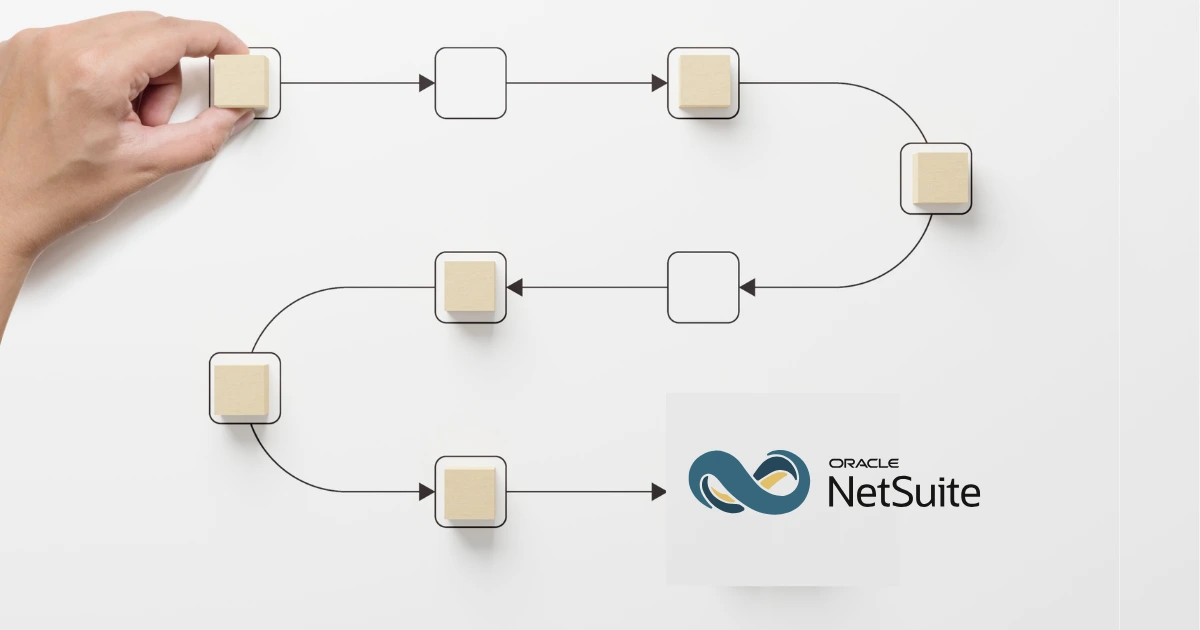
Implementing an Enterprise Resource Planning (ERP) platform such as Oracle NetSuite is a significant change for any business…
Read article →Frequently asked questions
Account-specific recommendations require an understanding of the actual business requirement and NetSuite environment.
Start with whether a prebuilt connector covers your systems and your volume. If it does, Celigo is normally the fastest and lowest-cost route and we would recommend it. Move to a custom API build when you need transformation logic, unusual record handling or performance a connector cannot give you. Boomi or MuleSoft make sense mainly when your organization has already standardized on them. The wrong answer is choosing the platform first and fitting requirements to it afterwards.
Three things, in our experience. Error handling gets treated as an afterthought, so failures are discovered days later by a person rather than at the time. Nobody decides which system is authoritative for a given record, so both write and the data diverges. And integrations are built against test volumes, then hit NetSuite governance limits under production load. All three are design decisions rather than platform limitations.
Read the full integration monitoring guideYes, and it is common. We start by reviewing how it is currently configured, because inheriting an integration without understanding its assumptions is how you break something that was working. Where we think a rebuild is genuinely cheaper than continuing to patch it, we will show you the reasoning rather than simply recommending it.
It depends on the number of flows, how standard the records are, and how cooperative the other system's API is, which is often the real variable. A single prebuilt connector flow is a different scale of work from a bidirectional integration with custom transformation. We scope against your specific flows instead of quoting a general range.
Sometimes, through file-based exchange on a schedule, a database-level connection, or an EDI channel where one exists. It is less immediate than an API and we would be straightforward with you about that tradeoff, because a nightly file exchange is a genuinely different operational picture from real-time sync.
We do, if you want us to. Integrations need attention when the connected system changes its API, when volumes grow, and when trading partners or business rules change. An integration nobody owns tends to degrade quietly rather than fail visibly, which is the harder failure mode to catch.
Plan your integration
Share the systems, data and volume involved. We will help determine the right integration method before recommending an approach.
Our customer support team is available for help.
Need help with NetSuite?
Chat with our team.