$81B
ERP Market 2026
7
Platforms Reviewed
13.4%
Cloud ERP CAGR
97%
Epicor Retention
90 Days
Fastest Go-Live
Free
Odoo Community
Manufacturing has always been a game of precision — the right material, in the right place, at the right time. But managing all of that with spreadsheets, disconnected software, or outdated on-premise systems? That’s where things start to fall apart.
More and more manufacturers are turning to cloud ERP to bring everything — production, inventory, finance, procurement, and quality control — under one roof. And in 2026, the options are better than ever. Whether you run a small job shop, a mid-size discrete manufacturer, or a large multi-site operation, this guide breaks down the best cloud ERP systems for manufacturing businesses right now — what they do well, who they’re best for, and what they’ll cost you.
⚡ Quick-Pick by Company Size
SMB / Growing
NetSuite · Business Central
Mid-Market
Acumatica · Epicor
Enterprise
SAP S/4HANA · QAD
Section 01What Is Cloud ERP for Manufacturing?
Cloud ERP for manufacturing is an enterprise resource planning system hosted on the internet — rather than on your own servers — that’s specifically built to handle the complexities of manufacturing operations. Think of it as the operating system for your entire factory: it connects your shop floor to your finance team, your suppliers to your warehouse, and your production schedule to your customer orders.Unlike generic cloud ERP systems, manufacturing ERP includes industry-specific tools like Bill of Materials (BOM) management, work order tracking, production scheduling, shop floor control, and quality compliance — not just accounting and HR. Already wondering whether cloud or on-premise ERP is right for your operation? We’ve covered that in detail in our
Cloud vs On-Premise ERP guide — check it out before you read on.
$81B
Global ERP market size in 2026
Fortune Business Insights, 2025
13.4%
Cloud ERP CAGR through 2030
Mordor Intelligence, 2025
70%
Of new ERP deployments are cloud-based
Cargoson / Panorama Consulting, 2025
53%
Of cloud ERP market is manufacturing-led
Fortune Business Insights, 2026
“The best cloud ERP doesn’t just digitize what you already do — it shows you the bottlenecks you didn’t know existed.”
Section 02Why Manufacturers Need Cloud-Based ERP
Here’s the honest truth: manufacturers who are still running their operations on legacy systems or disconnected tools are leaving efficiency — and money — on the table. The shift to cloud ERP is not just about modernisation. It’s about giving your operations team real-time information, removing manual overhead, and building a foundation that scales without breaking. Here’s what cloud ERP actually changes for manufacturers:
📡
Real-Time Shop Floor Visibility
Know exactly what’s being produced, what’s stalled, and where bottlenecks are — live, from any device. No more chasing supervisors for status updates.🌐
Multi-Site Remote Access
Whether your team is across the building or across the country, everyone works from the same live data. Multi-site operations become dramatically easier to manage.🔄
Automatic Updates — No IT Headaches
Cloud ERP vendors push updates automatically. You’re always on the latest version without a costly, disruptive IT project or re-implementation.📈
Scales With Your Growth
Add users, new facilities, or new modules as your business grows — without ripping and replacing the system or re-licensing everything from scratch.💰
Lower Upfront Investment
No expensive servers or on-premise infrastructure. You pay a predictable monthly or annual subscription instead of a large capital expense.🔒
Built-In Data Security
Enterprise-grade security managed by the vendor — automatic backups, disaster recovery, and compliance frameworks baked in, not bolted on.52%
Average ROI reported by companies after implementing cloud ERP — with manufacturers citing measurable improvements in inventory accuracy, on-time delivery, and production throughput within the first 12 months. The average payback period is
2.5 years for mid-market manufacturers.
Sources: NetSuite ERP Statistics · Forrester Research · Rand Group Section 03Core Features to Look for in Manufacturing ERP
Not all cloud ERP systems are built the same. When evaluating options for your manufacturing business, these are the core features that should be non-negotiable. A system that’s missing any of these will require expensive customisation — or will leave you with a critical operational gap:
- ✓
Bill of Materials (BOM) Management
Multi-level BOM support to manage complex product structures, assemblies, sub-assemblies, and engineering change orders.
- ✓
Production Planning & Scheduling
Capacity planning, work order management, and shop floor scheduling in real time — including finite and infinite capacity modes.
- ✓
Inventory & Raw Material Tracking
Lot tracking, serial number management, demand-based replenishment, and warehouse management across multiple locations.
- ✓
Quality Control & Compliance
Built-in inspection workflows, nonconformance tracking, and regulatory documentation for industries like medical devices, food & beverage, and automotive.
- ✓
Shop Floor Control
Real-time tracking of labor hours, machine output, scrap rates, and downtime directly at the operator and workstation level.
- ✓
Supply Chain Management
Integrated procurement, vendor management, purchase order automation, and demand forecasting tied directly to production planning.
- ✓
AI & IoT Integration
Predictive maintenance alerts, AI-driven scheduling recommendations, and direct connectivity with shop floor machines and sensors.
- ✓
Financial Management
Job costing, work-in-progress accounting, accounts payable/receivable, and multi-currency support for global operations.
Section 04Best Cloud ERP Systems for Manufacturing in 2026
Here’s a detailed look at the best cloud-based ERP systems for manufacturers in 2026 — covering what makes each one worth considering, what it costs, and who it’s the best fit for.
1. NetSuite (Oracle)
Best for SMBs graduating from QuickBooks or spreadsheets01
Cloud-Only
43,000+ Customers
Oracle-Backed
Founded 1998
219 Countries
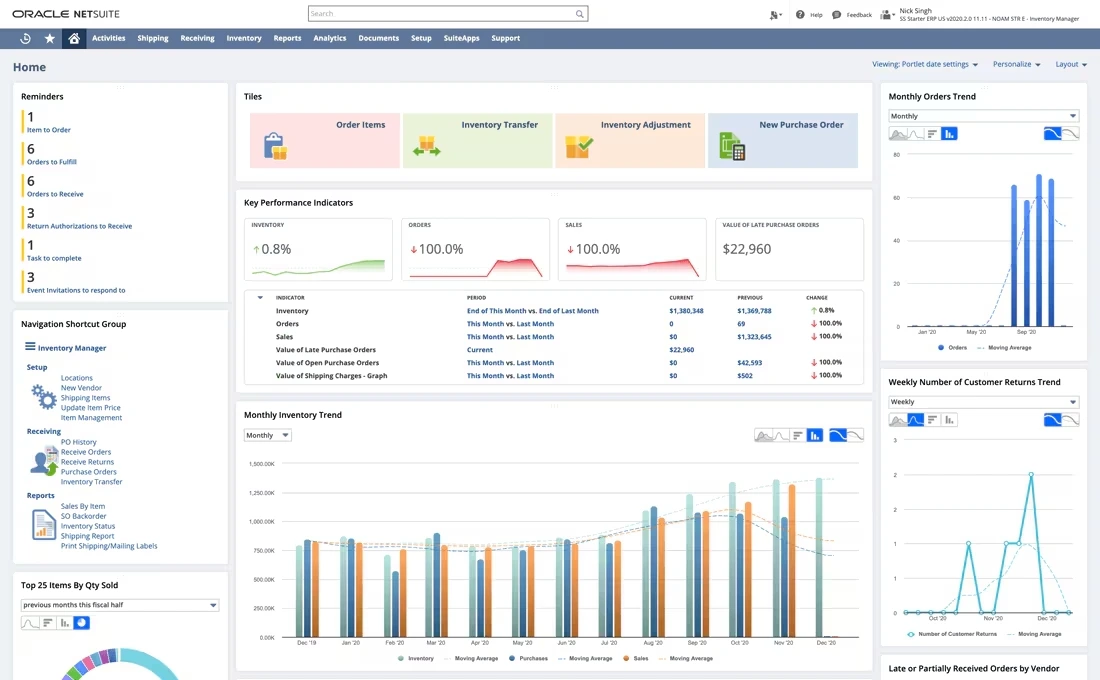
NetSuite is consistently one of the most popular starting points for small and mid-size manufacturers making the jump to a real ERP system. Originally launched in 1998 as one of the first cloud-native ERP platforms, it now serves over 43,000 businesses globally and is backed by Oracle’s infrastructure and investment.For manufacturers, NetSuite offers solid core capabilities including Bill of Materials management, work order processing, demand planning, material requirements planning (MRP), and inventory management with lot and serial number tracking. Its
Advanced Manufacturing module adds shop floor control, routings, and work-in-progress tracking for more complex production environments. The reporting and analytics capabilities are strong — real-time dashboards give production managers and finance teams a shared live view of the business. NetSuite also integrates well with ecommerce platforms like Shopify, making it a natural fit for manufacturers that sell direct-to-consumer.NetSuite is cloud-only — there’s no on-premise option. Pricing is negotiated rather than published transparently, so it’s worth engaging a
certified NetSuite partner to get competitive quotes tailored to your module requirements.
Ease of Implementation
78 / 100
Manufacturing Depth
68 / 100
Strengths
- True cloud-native from day one — no legacy baggage
- Strong reporting and real-time dashboards
- Native ecommerce integration (Shopify, Magento)
- Automatic twice-yearly upgrades included
- Large global partner and SI network
- Unified platform across finance, manufacturing, CRM
Watch Out For
- No on-premise option whatsoever
- Pricing negotiated — not published
- Advanced Manufacturing is a paid add-on module
- Can feel light for very complex discrete manufacturing
First-Year Total
$40K–$150K
2. Epicor Kinetic
Best for complex discrete manufacturers ($10M–$100M revenue)02

Cloud + On-Premise
97% Retention Rate
Mid-Market Leader
Discrete Mfg Specialist
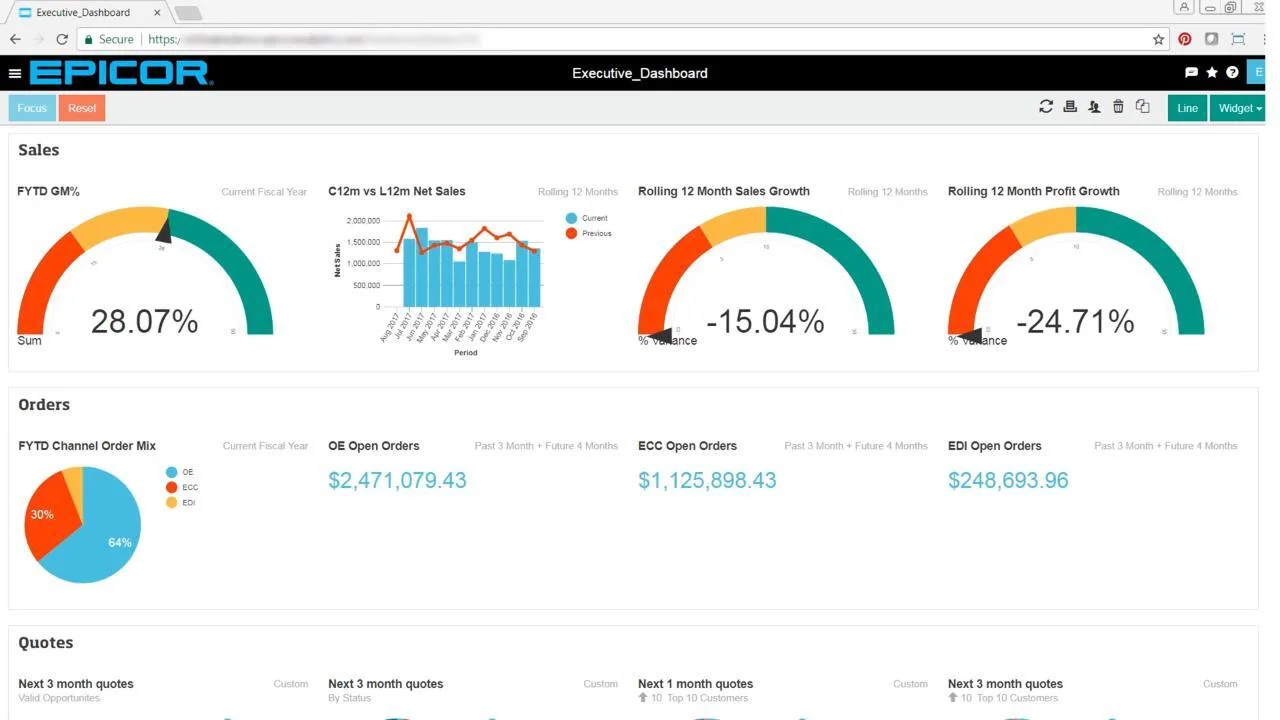
Epicor Kinetic (previously Epicor ERP) is widely considered the gold standard for mid-market discrete manufacturers. It has decades of deep manufacturing DNA and is built specifically for industries like industrial machinery, electronics, metal fabrication, and automotive supply — not a general-purpose ERP retrofitted for manufacturing.What makes Epicor stand out is the depth of its manufacturing execution capabilities. It handles multi-level BOM management, finite capacity scheduling, make-to-order and configure-to-order production, real-time shop floor data collection, and quality management — all natively, nothing bolted on. The platform supports both cloud and on-premise deployment, which gives manufacturers flexibility if they’re not ready to go fully cloud. Its mobile-first interface has improved significantly in recent years, making shop floor adoption much smoother. Epicor also has strong global capabilities for manufacturers operating across multiple countries and currencies.It’s worth noting that Epicor is best suited to businesses with some operational complexity. If you’re a very small manufacturer, the depth of the system may be more than you need right now — but if you’re growing fast, that headroom becomes an asset.
Ease of Implementation
58 / 100
Manufacturing Depth
92 / 100
Strengths
- Industry-leading manufacturing execution depth
- 97% customer retention rate — highest on this list
- Finite capacity scheduling built natively
- Cloud and on-premise deployment both available
- Strong automotive, aerospace, electronics vertical support
Watch Out For
- Steeper learning curve than NetSuite or Business Central
- Enterprise-level pricing — not SMB-friendly
- Implementation takes 6–12 months minimum
- Some older UI areas still feel dated
Starting Price
~$125/user/mo
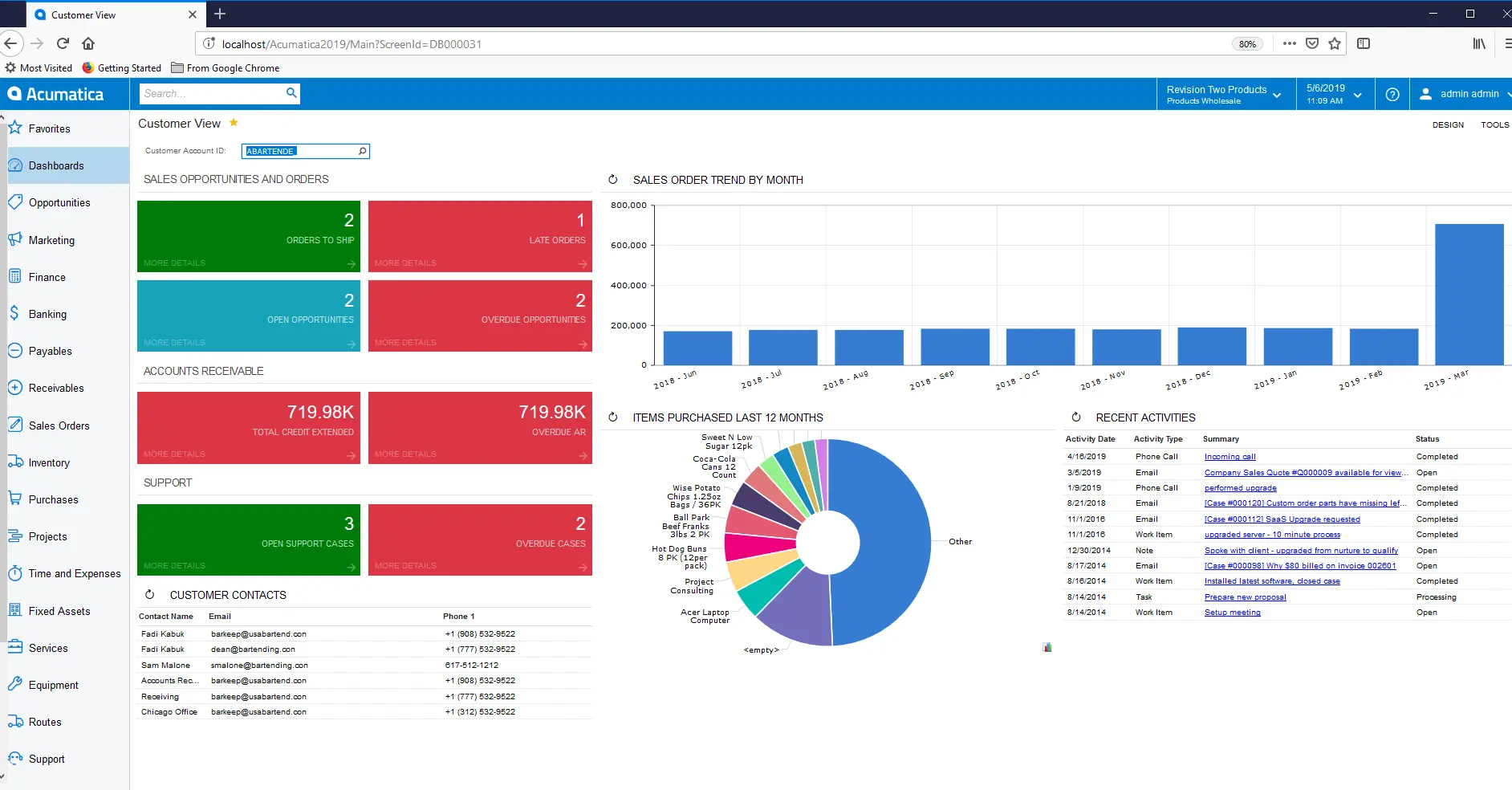
3. Acumatica Cloud ERP
Best for growing mid-size manufacturers wanting flexibility03
Cloud / Hybrid
Consumption-Based Pricing
Unlimited Users
Founded 2008
Acumatica is one of the fastest-growing ERP platforms on the market, and for good reason. Founded in 2008, it’s a genuinely modern cloud-native system built with flexibility at its core — not a legacy system ported to the cloud. Its biggest differentiator is its pricing model: you pay for compute resources consumed, not per user. That means you can give every employee access — shop floor workers, warehouse staff, managers — without escalating licence costs.Acumatica’s Manufacturing Edition covers the full production lifecycle: BOMs, production orders, material requirements planning, capacity planning, shop floor control, and product configurator. It also offers strong distribution, CRM, and project accounting capabilities, making it a good fit for manufacturers who also do project-based work or field service. It supports cloud, private cloud, and hybrid deployment — one of the more flexible options on this list.
Ease of Implementation
72 / 100
Manufacturing Depth
76 / 100
Pricing Flexibility
92 / 100
Strengths
- Unlimited users included in base pricing
- Consumption-based model scales with business activity
- Modern UI with strong mobile app support
- Cloud, private cloud, or hybrid deployment
- Strong project accounting and job costing
- Genuine partner ecosystem quality
Watch Out For
- Consumption pricing can surprise at high usage volumes
- Less deep than Epicor for complex discrete manufacturing
- Partner quality varies significantly by region
Pricing Model
Consumption-Based
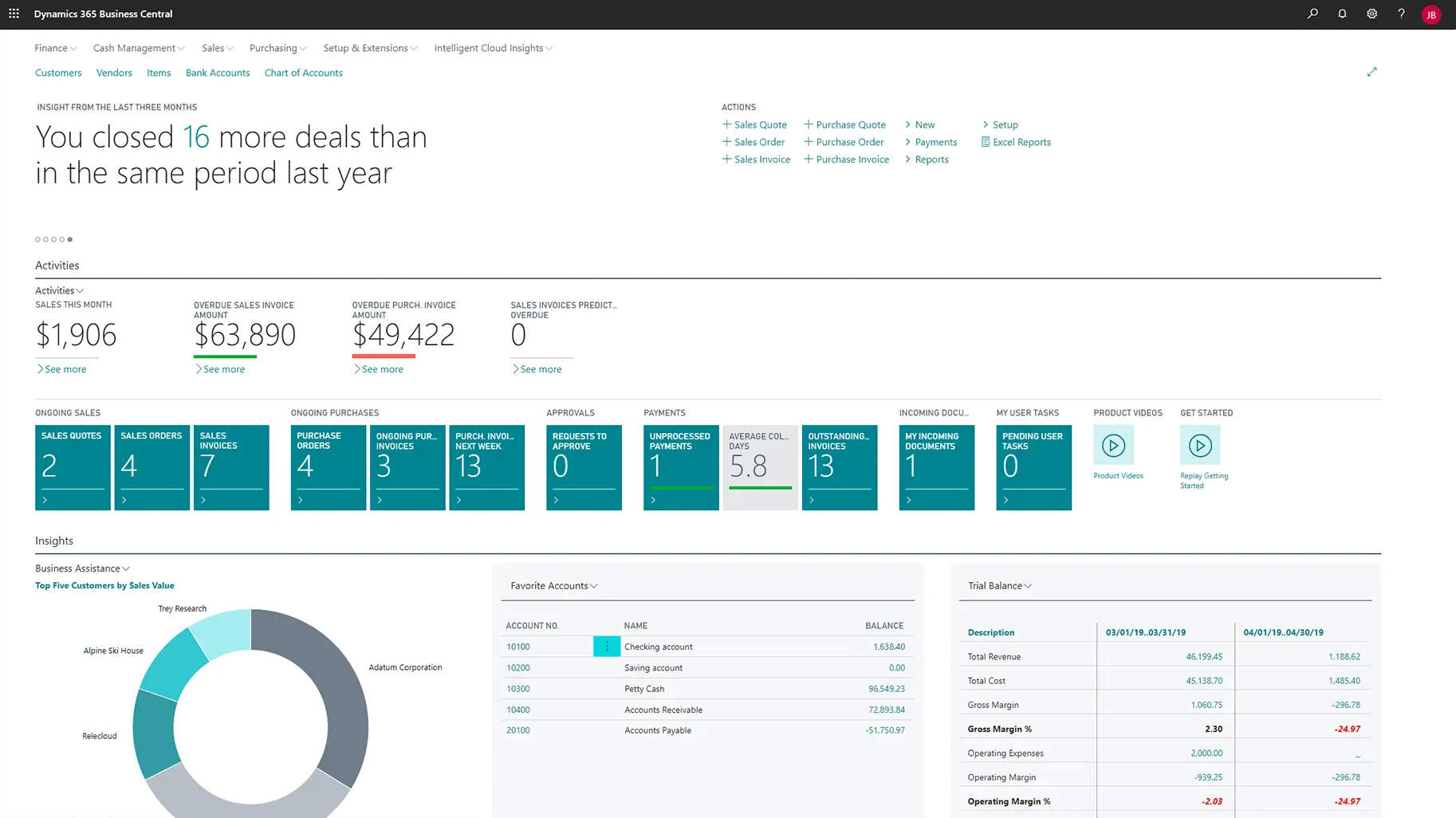
4. Microsoft Dynamics 365 Business Central
Best for Microsoft 365 users04
Cloud + On-Premise
Copilot AI
Teams & Excel
Power BI
If your team already lives in Excel, Outlook, and Teams, Microsoft Dynamics 365 Business Central is the most natural upgrade path to a full ERP system. It integrates natively with the entire Microsoft ecosystem, which dramatically reduces the learning curve and speeds up adoption across your shop floor and back office.Business Central covers the core manufacturing bases well: BOM management, production orders, capacity planning, and basic shop floor control. Its tight integration with Power BI means manufacturers can build rich, custom dashboards without needing a data analyst. Microsoft has also invested heavily in AI through its
Copilot features, which are now embedded directly into Business Central workflows — from intelligent financial drafting to inventory recommendations. The main limitation is depth: very complex discrete or process manufacturing operations may find it lacking compared to Epicor or SAP.
Ease of Implementation
80 / 100
Manufacturing Depth
65 / 100
Microsoft Ecosystem Fit
97 / 100
Strengths
- Native Teams, Outlook, Excel integration
- Copilot AI across finance and operations
- Transparent, published pricing
- Fast user adoption for M365 shops
- Cloud and on-premise both supported
Watch Out For
- Weaker for complex process manufacturing
- Customisation can get expensive quickly
- Best value only if you’re in the Microsoft ecosystem
Essentials Plan
$175/user/mo
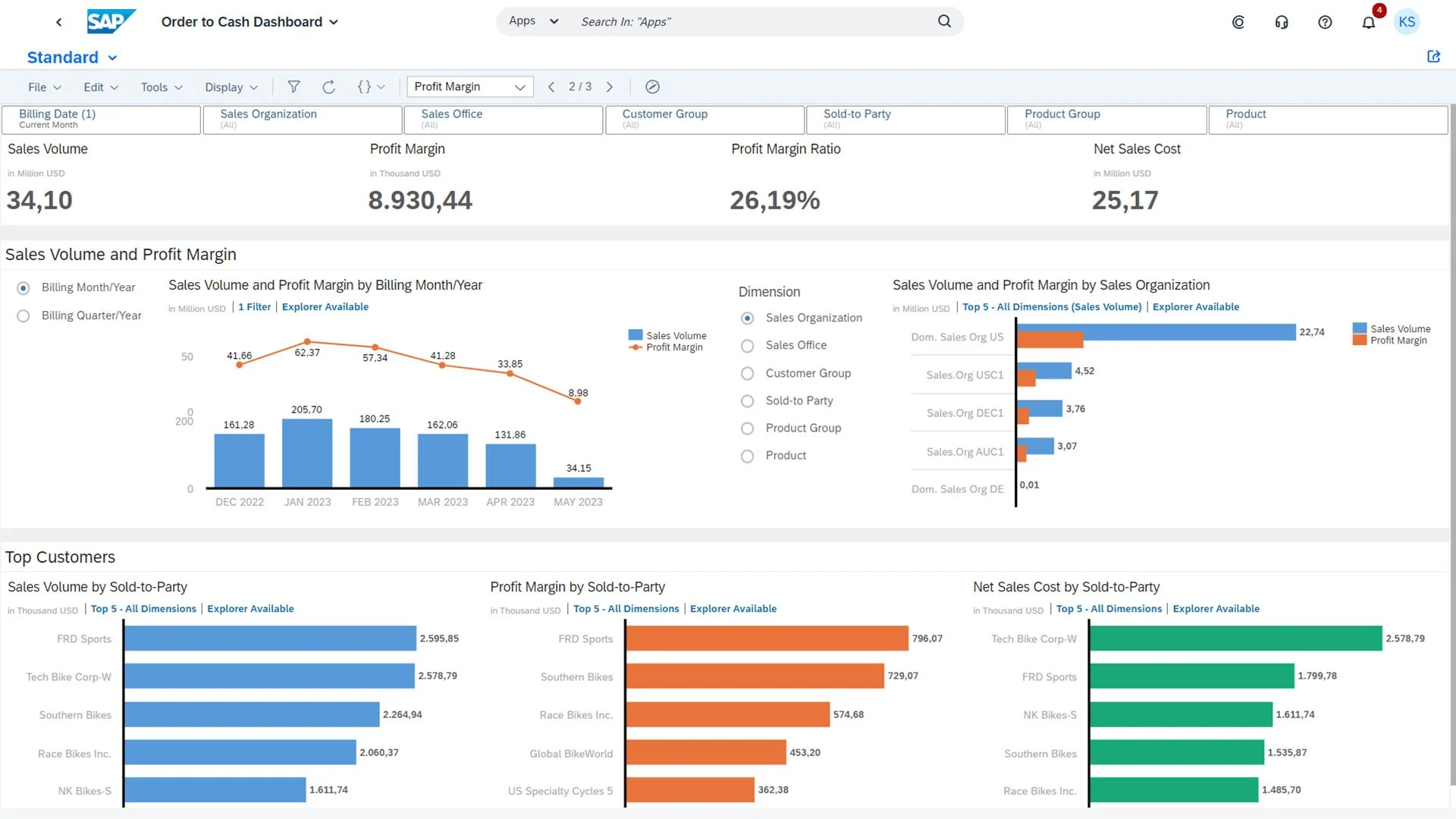
5. SAP S/4HANA Cloud
Best for enterprise manufacturers05
Cloud + On-Premise
Joule AI
Global Leader
SAP has been synonymous with ERP since the 1970s, and S/4HANA is their flagship modern cloud platform — a complete rebuild on the high-performance SAP HANA in-memory database. If you’re a large manufacturer with global operations, multiple production sites, complex supply chains, or stringent regulatory requirements, S/4HANA is in a category of its own.The manufacturing capabilities in S/4HANA are extraordinarily deep — covering every production mode from discrete to process to mixed-mode, with advanced features like embedded machine learning for predictive quality control, intelligent demand forecasting, and real-time supply chain visibility across hundreds of vendors.
SAP’s Joule AI assistant is built directly into everyday workflows, helping planners and operators make faster, smarter decisions without leaving the system. S/4HANA also integrates seamlessly with SAP Ariba for procurement, SAP SuccessFactors for HR, and SAP IBP for integrated business planning.SAP S/4HANA is not the right choice for small or even most mid-size manufacturers — the complexity and cost are designed for organisations that genuinely need that level of capability. But for companies above $100M in revenue with global operations, it’s hard to beat.
Ease of Implementation
28 / 100
Manufacturing Depth
98 / 100
Strengths
- Unmatched depth for complex global manufacturing
- Every production mode covered natively
- Real-time supply chain intelligence
- Joule AI embedded across all workflows
- 17% global ERP market share — largest installed base
Watch Out For
- Not appropriate for SMBs or most mid-market
- Implementation complexity in a class of its own
- Total cost can reach millions for large deployments
- 6–18 month timelines are normal, not exceptional
Starting Price
~$200/user/mo
Enterprise Range
$500K–$5M+
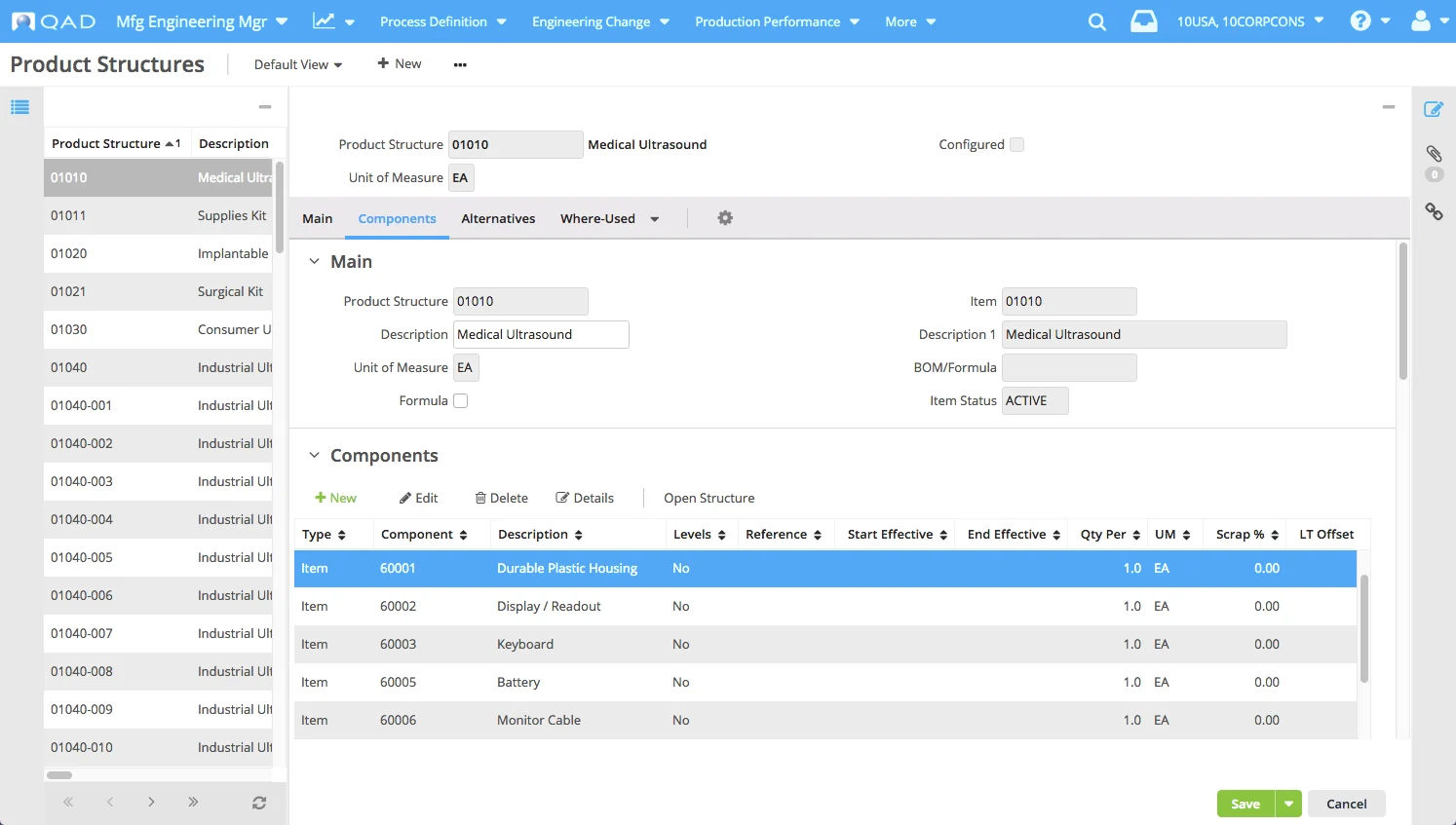
6. QAD Adaptive ERP
Best for regulated industries06
Cloud (AWS)
Champion AI
90-Day Go-Live
QAD Adaptive is a purpose-built manufacturing ERP that doesn’t try to be all things to all industries. Instead, it goes very deep for a specific set of verticals — automotive, life sciences, food and beverage, industrial equipment, and aerospace & defense — and that specialisation is exactly what makes it valuable for regulated manufacturers.What’s genuinely interesting about QAD in 2026 is its
Champion AI platform, which takes a different approach to AI in ERP. Rather than just surfacing insights for humans to act on, Champion AI uses intelligent agents to actually take autonomous actions — automatically optimising inventory, adjusting production schedules, and executing decisions without manual intervention. For manufacturers dealing with high SKU counts, volatile demand, or complex compliance requirements (like UDI labelling in medical devices or catch weight management in food and beverage), QAD’s out-of-the-box industry functionality means far less customisation work. QAD also claims manufacturers can go live in as little as 90 days using their Champion Pace implementation methodology.
Industry Specialisation
94 / 100
Ease of Implementation
70 / 100
Strengths
- Deep vertical expertise in regulated industries
- Autonomous AI agents — not just insight dashboards
- 90-day go-live via Champion Pace methodology
- Strong compliance tooling (UDI, IATF 16949, catch weight)
- Cloud-native hosted on AWS — no infrastructure needed
Watch Out For
- Narrow vertical focus — not suitable for general manufacturing
- Smaller partner network than SAP or Oracle
- Higher price per user than most on this list
Starting Price
~$250/user/mo
7. Odoo
Best for startups & small manufacturers07
Open-Source
100+ Modules
Free Community
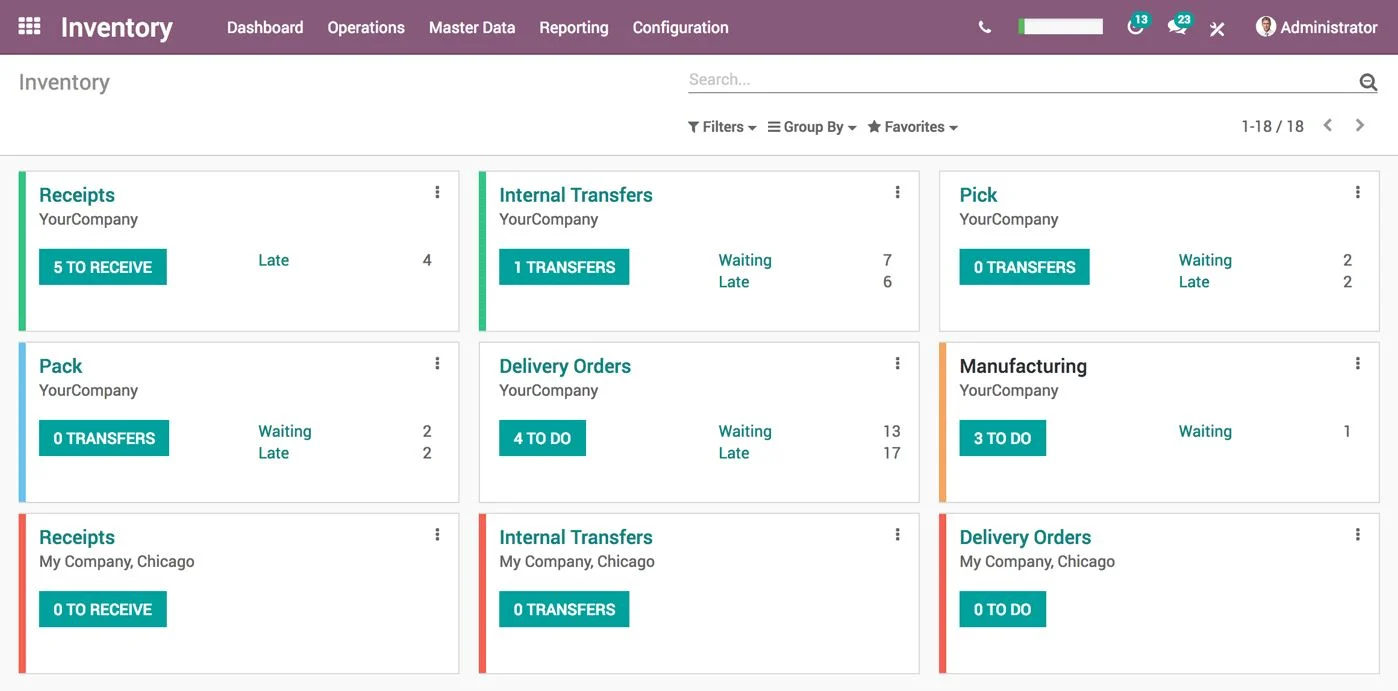
Odoo is the ERP system that often surprises people. With open-source roots and a modular architecture spanning over 100 apps, it offers a surprisingly comprehensive set of manufacturing capabilities at a price point that genuinely makes it accessible for small businesses and startups that other vendors on this list wouldn’t even quote.Odoo’s Manufacturing module covers BOMs, work orders, production scheduling, and shop floor control. Because of its modular structure, you can start with just the modules you need — manufacturing and inventory — and layer on CRM, ecommerce, accounting, or HR as your business grows. This plug-and-play approach makes Odoo one of the most flexible ERPs on the market for smaller manufacturers. The interface is modern and intuitive, and there’s a large community of implementation partners and developers who can customise it extensively. The
Community Edition is free — you pay only for hosting and implementation. The trade-off is depth: very complex or large manufacturing operations will hit its limits.
Ease of Getting Started
90 / 100
Manufacturing Depth
55 / 100
Enterprise Scalability
40 / 100
Strengths
- Community Edition is completely free
- Modular — start small, add modules as you grow
- Best-in-class modern UI for end-user adoption
- Huge community, extensions, and customisation options
- Dramatically cheaper than every alternative
Watch Out For
- Will hit limits with complex manufacturing operations
- Community Edition has no official support
- Customisation can create problems at upgrade time
- Not suitable for enterprise compliance requirements
Enterprise Standard
~$31/user/mo
Enterprise Custom
~$47/user/mo
Section 05Full Comparison — All 7 Platforms
Use this table to compare all seven platforms side by side on the metrics that matter most for a manufacturing purchasing decision.
| Platform | Best For | Deployment | Starting Price | Mfg Depth | AI Built-In | Go-Live |
|---|
| NetSuite | SMB / Mid-Market | Cloud only | $999/mo base | Moderate | Yes | 4–6 mo |
| Epicor Kinetic | Complex Discrete | Cloud + On-Prem | ~$125/user/mo | Very Deep | Yes | 6–12 mo |
| Acumatica | Growing Mid-Market | Cloud / Hybrid | Consumption-based | Good | Yes | 4–8 mo |
| Business Central | Microsoft Users | Cloud + On-Prem | $175/user/mo | Moderate | Copilot | 3–5 mo |
| SAP S/4HANA | Enterprise / Global | Cloud + On-Prem | ~$200/user/mo | Deepest | Joule AI | 6–18 mo |
| QAD Adaptive | Regulated Verticals | Cloud (AWS) | ~$250/user/mo | Very Deep | Autonomous | 90d–12 mo |
| Odoo | Startups / Small Mfg | Cloud / On-Prem | Free–$47/user/mo | Basic–Moderate | Limited | 1–4 mo |
Section 06How to Choose the Right Cloud ERP for Your Factory
With seven solid options in front of you, here’s how to actually narrow it down. These are the five questions that matter most — and that most evaluation processes skip entirely:
Start with your manufacturing typeDiscrete manufacturers (making distinct products from BOMs) and process manufacturers (formula-based, like food or chemicals) have very different requirements. Make sure the system you choose has deep native support for your specific production mode — not an add-on or workaround. This single question eliminates half the platforms on this list for most businesses.
Be honest about your size and budgetOdoo and Business Central are strong entry points for smaller manufacturers. Acumatica and Epicor hit the sweet spot for mid-market. SAP S/4HANA and QAD Adaptive are built for enterprise complexity. Trying to run SAP at 50 employees — or Odoo at 5,000 — creates serious problems in both directions.
Check your existing tech stackAlready on Microsoft 365? Business Central becomes the natural fit. Running Salesforce for CRM? Check API compatibility before committing. Selling via Shopify? NetSuite’s native connector saves months of integration work. The best ERP is one that works with what you already have.
Ask about implementation timelines — honestlyQAD claims 90 days. NetSuite typically runs 4–6 months. SAP can take a year or more. Make sure the timeline fits your operational reality, not a vendor’s best-case marketing scenario. Always ask for references from companies your exact size and in your exact industry.
Don’t underestimate change managementThe software is only half the story. The biggest ERP failures come from poor user adoption, not bad technology. Choose a vendor and implementation partner with strong training resources and a track record in your industry. The best ERP is the one your people will actually use — on day one and three years later.
Bottom Line
The right cloud ERP won’t just digitise your current processes — it will help you run a
smarter, faster, and more connected manufacturing operation. The key is matching the system to your specific manufacturing type, your business size, and where you want to be in three to five years — not just where you are today. Take your time, get demos from at least two or three vendors, and make sure your operations team is involved in the decision from the start.
Not Sure Which ERP Fits Your Manufacturing Operation?
Our team has implemented cloud ERP for manufacturers across discrete, process, and mixed-mode production. Tell us about your setup — we’ll give you a straight recommendation, no pitch, no pressure.